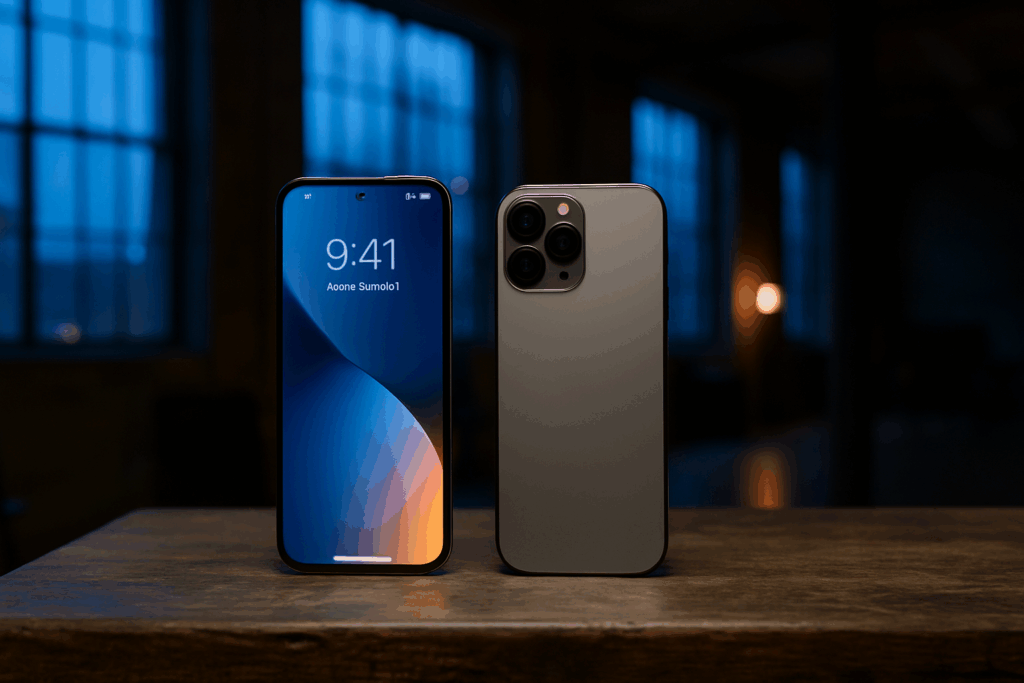

I watch tech announcements flood my feed every single day.
You’re probably tired of trying to figure out which ones actually matter. Most of it is just noise wrapped in buzzwords.
Here’s the reality: a handful of developments are changing how we work and live right now. The rest? You can ignore them.
I’ve spent weeks sorting through product launches, industry reports, and developer conferences. I’m looking for one thing: what’s making a real difference today.
This article gives you the tech updates that count. AI tools you’ll actually use. Hardware that changes what’s possible. Software that solves problems you have right now.
At FNT Kech, we track technology as it happens. We test the products and talk to the people building them. That means you’re getting what works, not what sounds good in a press release.
You’ll learn which AI developments are ready for you to use, what computing changes mean for your devices, and which connectivity improvements will hit your daily life first.
No hype. Just the tech that matters now and what it means for you.
The AI Evolution: Beyond Chatbots to Integrated Intelligence
AI isn’t just answering questions anymore.
It’s creating things. Real things that look and sound like they came from actual humans.
The Leap to Multimodality and Generative Video
Remember when AI could only spit out text responses? Those days are gone.
Now we’re watching AI generate images from a few words. It composes music. And here’s where it gets wild: it creates video that looks disturbingly real.
I’m talking about full scenes with movement and lighting and details that would’ve taken a production team weeks to pull off. Now it happens in minutes.
The implications are massive. Content creators can prototype ideas before spending a dime on production. Designers can visualize concepts that used to live only in their heads. And entertainment? We’re just scratching the surface of what’s possible.
Some people worry this will replace human creativity. I don’t buy that. What I see is a tool that lets creative people do more with less friction.
On-Device AI Goes Mainstream
Here’s what changed everything: AI moved off the cloud and onto your phone.
Your device now runs models that used to require server farms. And that shift matters more than most people realize.
Privacy gets better because your data stays on your device. No more sending every request to some company’s servers (where who knows what happens to it).
Response time drops to nothing. You get answers instantly instead of waiting for that round trip to the cloud and back.
And you can use these features with no internet connection. On a plane. In the basement. Wherever.
The new chips in flagship phones and laptops make this possible. Apple’s neural engine. Google’s Tensor. Qualcomm’s AI processors. They’re all pushing the same direction.
Pro tip: Check your phone’s settings for AI features you didn’t know existed. Real-time translation during calls. Photo editing that removes objects like they were never there. Voice transcription that happens as you speak.
Most people never turn these on because they don’t know they’re there.
I use the real-time translation feature more than I expected. Turns out it’s pretty handy when you’re traveling or working with international clients.
The Rise of Specialized Models
Big models get all the attention. But something quieter is happening with smaller ones.
Companies are building AI models designed for specific tasks instead of trying to do everything. These specialized models (called SLMs) run faster and cost less to operate.
A business doesn’t need a massive general-purpose AI to handle customer service or analyze spreadsheets. They need something focused that does one job really well.
This makes AI accessible to smaller companies that can’t afford to run the big models. And honestly, that’s where things get interesting for technology news Fntkech covers regularly. As smaller companies begin to harness the power of AI thanks to accessible technologies, the innovations and breakthroughs emerging from this shift are precisely the kind of stories that Fntkech captures with enthusiasm.
The barrier to entry keeps dropping. Which means we’ll see AI show up in places we haven’t thought about yet.
Hardware’s New Frontier: Spatial Computing and Next-Gen Chips
Spatial Computing Enters the Arena
Spatial computing is basically what happens when your digital stuff stops living in a flat screen and starts hanging out in your actual room.
I’m talking about digital content that knows where you are and what you’re looking at. It responds to your movements and fits into your physical space like it belongs there.
Apple made waves with their headset. Meta keeps pushing their vision. Google’s been quietly working on their own angle. But here’s what matters more than any single gadget.
They’re all building an ecosystem. And when tech giants start building ecosystems together (even while competing), that’s when things get real.
Think of it like the early smartphone days. The iPhone launched, but what changed everything was the App Store and every developer jumping in.
Real-World Applications
Gaming is cool and all. But spatial computing is already doing serious work where it counts.
Surgeons are practicing complex procedures in 3D simulations before they ever touch a patient. They can walk around a virtual organ and see it from angles that would be impossible in a textbook (or you know, without actually cutting someone open).
Engineers at Boeing and Ford are collaborating on car designs in shared 3D spaces. One person in Detroit and another in Germany can both stand around the same virtual engine and point at the same bolt.
Retail is getting weird in a good way. IKEA lets you drop furniture into your living room before buying. Warby Parker does the same with glasses on your face. According to technoly news Fntkech, these aren’t gimmicks anymore. Conversion rates are jumping 40% when customers can see products in their actual space.
The Quantum and Neuromorphic Horizon
Okay, this is where it gets a bit sci-fi. But it’s happening now.
Regular computer chips think in ones and zeros. They’re fast, but they solve problems one step at a time. Quantum processors work differently. They can test multiple solutions at once because of some physics magic involving particles existing in multiple states.
I won’t pretend I fully understand the quantum mechanics. But I do understand this: problems that would take a regular computer 10,000 years can get solved in minutes.
Neuromorphic chips are the other piece. They’re designed to work like your brain does. Instead of following rigid instructions, they learn patterns and adapt.
IBM just announced breakthroughs in both areas. Google’s quantum computer solved a calculation in 200 seconds that would take the world’s fastest supercomputer 47 years. That was in 2019, and they’ve gotten better since.
Gadget Spotlight: Apple’s M3 Chip
Let me show you how this all connects.
Apple’s M3 chip uses a 3-nanometer architecture. That’s absurdly small. For context, a human hair is about 80,000 nanometers wide.
But size isn’t the point. The M3 has a new GPU design with something called Dynamic Caching. Instead of reserving a fixed chunk of memory for graphics tasks, it allocates exactly what each task needs in real time.
Why does this matter for spatial computing? Because rendering 3D environments that respond to your head movements requires massive graphics processing. The M3 can handle multiple 4K displays while running AI models that track your eye movements and adjust focus on the fly.
It’s the kind of chip that makes spatial computing actually usable instead of a laggy mess that gives you motion sickness.
The hardware is finally catching up to the vision. And that’s when things get interesting.
Software & Connectivity: Building a Smarter, Faster Web

Web3 finally grew up.
I’m not talking about the crypto hype from 2021. That was mostly noise. What’s happening now is different. While the crypto hype from 2021 created a lot of noise, the latest developments highlighted in the Technology Updates Fntkech signal a promising shift towards more sustainable and innovative gaming solutions that could redefine the industry.
Web3 Matures into Practical Tools
Decentralized Identity (DID) is starting to make sense. Instead of giving Facebook or Google control over your login credentials, you own them. You decide what data to share and when.
Think of it like carrying your own passport instead of asking permission to exist online every time you visit a new site.
DePIN (decentralized physical infrastructure networks) is even more interesting. We’re seeing real-world services built on decentralized networks. Things like community-owned internet nodes and distributed storage that actually works.
Some people will say this is just blockchain wrapped in new packaging. And sure, there’s overlap. But dismissing it entirely means missing what’s actually being built right now.
Wi-Fi 7 Becomes the New Standard
Your internet is about to get a serious upgrade.
Wi-Fi 7 isn’t just faster. It’s built for how we actually use the web today. Cloud gaming without lag spikes (finally). VR that doesn’t make you dizzy because of latency issues. 8K streaming that doesn’t buffer every thirty seconds.
The real win? Stability in crowded spaces. If you’ve ever tried to connect in an apartment building or busy office, you know the struggle. Wi-Fi 7 handles device-dense environments without choking.
According to technology news fntkech, multi-gigabit speeds will become standard in consumer routers by late 2025.
Here’s my prediction. Within two years, we’ll see the first mainstream apps that require Wi-Fi 7 to function properly. Not recommend it. Require it.
Why This Matters
Mature decentralized protocols plus next-gen connectivity creates something we haven’t had before. A web that’s both faster and more resilient.
You control your identity. Your connection doesn’t drop when your neighbor starts streaming. Services run on distributed networks instead of single points of failure.
It’s not perfect yet. But it’s getting close to the advantages of default apps fntkech promised years ago.
The internet is rebuilding itself from the ground up. And for once, it might actually be better.
Putting It All Together: Your Tech Action Plan
You’ve got the information. Now what?
That’s the question I hear most after covering technology updates fntkech. People know what’s coming but they don’t know where to start.
So let me break this down into three moves you can make today.
Start with AI tools that actually save time. I’m talking about the new features in software you already use. Microsoft Word now summarizes 50-page documents in seconds. Gmail can draft professional responses while you’re still thinking about what to say. GitHub Copilot writes code snippets faster than you can type them out.
Pick one task that eats up your day and find an AI feature that handles it.
Get ready for spatial computing before everyone else does. You don’t need to buy a headset tomorrow. But you should start thinking in three dimensions. Blender is free and teaches you 3D creation. Unity offers AR development kits that run on your phone (and they’re easier than you think).
The shift is coming whether we like it or not.
Switch to passkeys now. Passwords are done. Passkeys use your face or fingerprint instead of something you have to remember. Apple, Google, and Microsoft all support them. They stop phishing attacks cold because there’s nothing to steal. In a world where passwords are becoming obsolete, understanding The Advantages of Default Apps Fntkech can significantly enhance your security by seamlessly integrating passkey technology into your daily digital interactions. Under Desk Bike Fntkech is where I take this idea even further.
Most people wait until they get hacked. Don’t be most people.
Navigating the Next Wave of Innovation
You came here to understand what’s happening in tech right now.
I’ve shown you the shifts that matter. From intelligent on-device AI to spatial computing, these aren’t just buzzwords. They’re the foundation of what comes next.
Technology moves fast. That’s not changing.
But you don’t need to chase every headline. You need to understand the core trends that will actually impact your world.
These developments give you a framework. You can anticipate changes before they hit. You can spot opportunities while others are still catching up.
Here’s what I want you to do: Pick one technology we covered. Dig deeper into it. Ask yourself how it might change your work or your daily routine.
FNT Kech tracks these trends so you don’t have to guess what matters. We cut through the hype and show you the real story.
The next wave is already building. Your move is to stay informed and think about what it means for you.
 Syrelia Zentha writes the kind of technology news and updates content that people actually send to each other. Not because it's flashy or controversial, but because it's the sort of thing where you read it and immediately think of three people who need to see it. Syrelia has a talent for identifying the questions that a lot of people have but haven't quite figured out how to articulate yet — and then answering them properly.
They covers a lot of ground: Technology News and Updates, Emerging Tech Trends, Expert Opinions, and plenty of adjacent territory that doesn't always get treated with the same seriousness. The consistency across all of it is a certain kind of respect for the reader. Syrelia doesn't assume people are stupid, and they doesn't assume they know everything either. They writes for someone who is genuinely trying to figure something out — because that's usually who's actually reading. That assumption shapes everything from how they structures an explanation to how much background they includes before getting to the point.
Beyond the practical stuff, there's something in Syrelia's writing that reflects a real investment in the subject — not performed enthusiasm, but the kind of sustained interest that produces insight over time. They has been paying attention to technology news and updates long enough that they notices things a more casual observer would miss. That depth shows up in the work in ways that are hard to fake.
Syrelia Zentha writes the kind of technology news and updates content that people actually send to each other. Not because it's flashy or controversial, but because it's the sort of thing where you read it and immediately think of three people who need to see it. Syrelia has a talent for identifying the questions that a lot of people have but haven't quite figured out how to articulate yet — and then answering them properly.
They covers a lot of ground: Technology News and Updates, Emerging Tech Trends, Expert Opinions, and plenty of adjacent territory that doesn't always get treated with the same seriousness. The consistency across all of it is a certain kind of respect for the reader. Syrelia doesn't assume people are stupid, and they doesn't assume they know everything either. They writes for someone who is genuinely trying to figure something out — because that's usually who's actually reading. That assumption shapes everything from how they structures an explanation to how much background they includes before getting to the point.
Beyond the practical stuff, there's something in Syrelia's writing that reflects a real investment in the subject — not performed enthusiasm, but the kind of sustained interest that produces insight over time. They has been paying attention to technology news and updates long enough that they notices things a more casual observer would miss. That depth shows up in the work in ways that are hard to fake.