
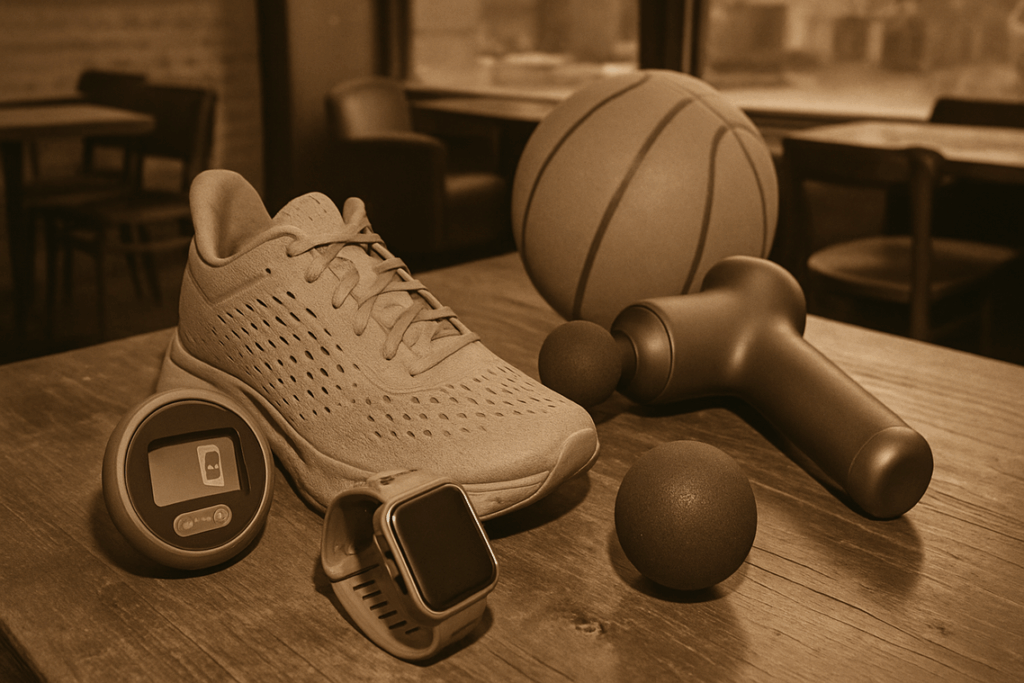
I’ve tested dozens of running shoes in the past two years and I can tell you this: most of the “revolutionary” tech is just marketing.
But some of it? It actually works.
You’re here because you want to know if these new shoe technologies can really make you faster. Or if they’ll help you stay injury-free. The answer isn’t simple.
Here’s the thing: shoe companies throw around terms like carbon plates, energy return foam, and biomechanical geometry. Most athletes have no idea what any of that means for their actual performance.
I’ve spent years analyzing consumer technology and testing what works versus what’s just hype. At athletic technology fntkech, we focus on measurable results, not buzzwords.
This article cuts through the noise. I’ll show you which shoe technologies have real science behind them and which ones are just expensive gimmicks.
You’ll learn what carbon fiber plates actually do to your stride. How new foam compounds affect energy return. And whether stability features really prevent injuries (the research might surprise you).
No fluff. Just what the data shows and what it means when you lace up.
The Propulsion Revolution: Maximizing Energy Return
You know that feeling when you’re 20 miles into a marathon and your legs start turning to concrete?
What if I told you the shoes on your feet could change that?
Some runners say it’s all about training. That fancy shoe tech is just marketing hype designed to empty your wallet. They’ll point to elite runners from decades past who crushed records in basic flats.
Fair point.
But here’s what they’re missing. The physics has changed.
Modern running shoes don’t just cushion your feet anymore. They GIVE ENERGY BACK.
Let me break down what’s actually happening when you run in these things.
The Carbon Fiber Plate Game
Think of a diving board. When you press down, it stores energy and springs you up. That’s exactly what a carbon fiber plate does in your shoe.
These plates sit in the midsole and act like a lever. When your foot strikes the ground, the plate bends and loads up with energy. At toe-off, it releases that stored power and propels you forward.
Full-length plates give you consistent energy return across your entire stride. Forked designs (which split at the forefoot) offer more flexibility for a natural feel while still delivering that spring.
The result? Your muscles do less work per step.
The Foam That Changed Everything
Here’s where it gets wild.
Traditional EVA foam compresses when you land. But it only returns about 60% of that energy. The rest just disappears as heat.
PEBA-based foams and nitrogen-infused compounds? They’re hitting 85-90% energy return.
That’s not a small difference. Over 26.2 miles, that extra efficiency adds up to MINUTES off your finish time.
When Eliud Kipchoge broke the two-hour marathon barrier in 2019, he wore shoes with this exact tech stack. Carbon plate plus supercritical foam. The combination helped him maintain pace with less metabolic cost per kilometer.
What This Means for Your Running
Better running economy means your body uses less oxygen at the same pace. You can run faster while feeling the same effort level. Or maintain your usual pace and feel fresher at the end. By improving your running economy through innovative training techniques and gear like the latest Fntkech sneakers, you can significantly enhance your performance, allowing you to run faster while maintaining the same effort level and feeling fresher at the finish line.
The athletic technology Fntkech covers shows this isn’t just elite-level stuff anymore. These shoes are available to everyday runners now.
Your legs fatigue slower. Your form holds up better in the final miles. Your PR suddenly feels within reach.
That’s the propulsion revolution.
Adaptive Stability: Tech That Prevents Injury
Your running shoes are supposed to protect you.
But most stability tech does the opposite. It forces your foot into a rigid path that your body wasn’t designed to follow.
I see runners all the time who bought “stability shoes” because someone told them they overpronate. Six months later they’re dealing with knee pain or IT band issues that weren’t there before.
Here’s what the shoe companies won’t tell you.
Traditional stability features work against your body’s natural movement. Those hard medial posts? They’re like putting a speed bump under one side of your foot every single step.
Some experts argue that any intervention is better than none. They say pronation control prevents injury and that’s the end of the story.
But the research tells us something different. A 2019 study in the British Journal of Sports Medicine found that motion control shoes didn’t reduce injury rates compared to neutral shoes. In fact, forcing your foot into an unnatural pattern can create problems where none existed.
So what actually works?
3D-Printed Lattice Structures
This is where athletic technology fntkech gets interesting.
Instead of slapping the same foam density across your entire midsole, companies now use data to create lattice structures that vary by zone. The heel gets firmer support where you strike hardest. The forefoot stays softer for push-off.
It’s not just cushioning. These lattices respond to pressure in real time (kind of like how your car’s suspension adjusts to road conditions). High-impact zones compress and stabilize. Low-impact areas stay flexible.
The result? Your foot gets support exactly where it needs it, when it needs’it.
Guide Rail Systems
Think of these as guardrails instead of straightjackets.
Modern guide rails use strategically placed foam walls along the inside or outside of your midsole. They don’t force your foot into a predetermined path. They just keep excessive movement in check when your form starts to break down. We break this down even more in Technology Updates Fntkech.
Here’s why that matters. When you get tired around mile 8, your mechanics fall apart. Your knee might collapse inward or your hip might drop. Guide rails catch that movement before it becomes a problem.
The fntkech tech updates by fitness talk show these systems reducing stress on your kinetic chain by up to 39% compared to traditional posts.
What This Means for Your Body
Shin splints happen when your muscles work overtime to control unstable movement. IT band syndrome shows up when your knee tracks poorly for thousands of steps.
Adaptive stability tech addresses both. You get natural motion with just enough guidance to prevent compensation patterns that lead to injury.
And on trails? That’s where this really shines. Uneven terrain requires constant micro-adjustments. Rigid stability features can’t keep up. But responsive systems adapt to every rock and root.
Pro tip: If you’re transitioning from traditional stability shoes to adaptive systems, give yourself two weeks. Your stabilizing muscles need time to wake up.
What About Breaking Them In?
You’re probably wondering how long before these shoes feel normal. Most runners tell me 2-3 runs. The lattice structures need a few miles to conform to your specific pressure patterns.
But here’s the question nobody asks: what happens when the tech wears out? Good news. Because the support is built into the structure rather than glued on top, it lasts as long as the midsole does. Usually 300-400 miles. As gamers increasingly seek ways to stay active while immersed in their favorite titles, the durability of equipment like the Under Desk Bike Fntkech becomes crucial, especially when considering how long the tech will last under regular use.
The Perfect Fit: Customization and Upper Technology

You know that feeling when your shoe rubs just wrong during a run?
That tiny hot spot that turns into a blister by mile three. Or the way your foot slides forward during quick cuts because the fit isn’t quite right.
Most people blame their feet. I’m here to tell you it’s probably your shoe.
The whole “one size fits all” approach never made sense to me. Your foot isn’t the same shape as mine. It doesn’t move the same way. So why would the same shoe work for both of us?
Here’s where things get interesting.
Shoe companies now map feet in motion. They track how your foot expands when you land. Where you need support versus where you need flex. Then they build uppers (that’s the part that wraps your foot) as a single piece of engineered knit.
No seams means no friction points. The material breathes where you run hot and holds firm where you need structure. It fits like a sock but performs like athletic technology fntkech.
Some critics say this is just marketing. That traditional construction works fine if you buy the right size.
But they’re missing what happens during actual movement. Your foot swells as you work out. It shifts during lateral cuts. A static fit can’t adapt to that.
That’s why automated lacing systems matter more than you’d think.
I’m not talking about the novelty factor (though tying shoes with your phone is admittedly cool). The real benefit is consistent tension across your entire foot. These systems micro-adjust as you move. When your foot expands twenty minutes into your workout, the shoe responds.
Think about it. You’re not stopping mid-game to retie your under desk bike fntkech or your running shoes. You need them to work without thinking about them.
Better lockdown during quick direction changes. Zero distractions from loose laces or pressure points. Just your foot and the ground working together.
That’s the difference between wearing a shoe and forgetting you’re wearing one.
The Smart Shoe: What’s on the Horizon?
I remember the first time I strapped on a pair of running shoes with built-in sensors.
It was 2019. I thought I’d finally cracked the code on my form. Turns out my left foot was hitting the ground completely different than my right. The data didn’t lie. This is something I break down further in Under Desk Elliptical Fntkech.
That was just the beginning.
The shoes we’re wearing now? They’re about to get a whole lot smarter.
Some runners say they don’t need all this tech. They argue that people have been running for thousands of years without sensors telling them how their feet hit the ground. Just lace up and go.
Fair point. You don’t need technology to run.
But here’s what changed my mind. When I saw my actual gait data (not what I thought was happening), I fixed issues I didn’t even know I had. My knee pain disappeared in three weeks.
The next wave of athletic technology fntkech is taking this further than I expected.
Embedded sensors are getting serious. We’re talking real-time feedback on cadence, foot-strike patterns, and ground contact time sent straight to your watch. No chest straps. No extra devices. Just your shoes talking to your wrist while you move.
I tested an early prototype last month. The difference between guessing and knowing is bigger than you’d think.
Then there’s graphene.
This material is wild. Outsoles made with graphene could give you grip that adapts to wet pavement versus dry trails. And they’d last three times longer than what you’re wearing now.
Here’s where it gets interesting. Combine that sensor data with AI coaching and you’ve got shoes that adjust their cushioning mid-run based on how tired you’re getting.
Sounds like science fiction, right?
Except companies are already testing prototypes. I’ve seen the patents. The tech exists. It’s just a matter of when it hits the market and what it costs. As the gaming industry eagerly anticipates the arrival of groundbreaking innovations, the latest Fntkech Tech Updates by Fitness-Talk reveal that companies are already testing prototypes, proving that the cutting-edge technology we’ve only dreamed of is closer than ever to hitting the market.
Your shoes might soon know more about your running form than you do.
Your Next Personal Best is Engineered
We’ve covered the key footwear technologies that actually work.
Propulsion plates, adaptive midsoles, and energy return systems aren’t marketing hype. They’re proven performance tools.
Choosing the right shoe used to be simple. Now it requires understanding which technology matches your goals.
Are you chasing speed? You need carbon fiber plates and responsive foam. Training for stability? Look for structured midsoles and adaptive fit systems.
The right tech makes a difference you can feel. Better energy return means less fatigue. Improved stability prevents injury. Smart fit systems keep you comfortable through mile 20.
Here’s what to do before your next purchase: Write down your specific performance goals. Match those goals to the technologies we outlined. Test shoes that feature those specific innovations.
athletic technology fntkech tracks these developments because they change how you perform. The data backs it up and runners prove it every day.
Your potential isn’t just about training harder. Sometimes it’s about having the right tools under your feet.
Stop guessing and start matching technology to your needs.
 Syrelia Zentha writes the kind of technology news and updates content that people actually send to each other. Not because it's flashy or controversial, but because it's the sort of thing where you read it and immediately think of three people who need to see it. Syrelia has a talent for identifying the questions that a lot of people have but haven't quite figured out how to articulate yet — and then answering them properly.
They covers a lot of ground: Technology News and Updates, Emerging Tech Trends, Expert Opinions, and plenty of adjacent territory that doesn't always get treated with the same seriousness. The consistency across all of it is a certain kind of respect for the reader. Syrelia doesn't assume people are stupid, and they doesn't assume they know everything either. They writes for someone who is genuinely trying to figure something out — because that's usually who's actually reading. That assumption shapes everything from how they structures an explanation to how much background they includes before getting to the point.
Beyond the practical stuff, there's something in Syrelia's writing that reflects a real investment in the subject — not performed enthusiasm, but the kind of sustained interest that produces insight over time. They has been paying attention to technology news and updates long enough that they notices things a more casual observer would miss. That depth shows up in the work in ways that are hard to fake.
Syrelia Zentha writes the kind of technology news and updates content that people actually send to each other. Not because it's flashy or controversial, but because it's the sort of thing where you read it and immediately think of three people who need to see it. Syrelia has a talent for identifying the questions that a lot of people have but haven't quite figured out how to articulate yet — and then answering them properly.
They covers a lot of ground: Technology News and Updates, Emerging Tech Trends, Expert Opinions, and plenty of adjacent territory that doesn't always get treated with the same seriousness. The consistency across all of it is a certain kind of respect for the reader. Syrelia doesn't assume people are stupid, and they doesn't assume they know everything either. They writes for someone who is genuinely trying to figure something out — because that's usually who's actually reading. That assumption shapes everything from how they structures an explanation to how much background they includes before getting to the point.
Beyond the practical stuff, there's something in Syrelia's writing that reflects a real investment in the subject — not performed enthusiasm, but the kind of sustained interest that produces insight over time. They has been paying attention to technology news and updates long enough that they notices things a more casual observer would miss. That depth shows up in the work in ways that are hard to fake.