
Converting 405 pounds to kilograms is a common task, especially in fitness, shipping, and international contexts. 405 pounds is 183.70 kilograms.
I’ll not only give you the answer but also explain the simple math behind it, provide real-world context, and offer tools to make any future conversions effortless. Understanding this conversion is important because most of the world uses the metric system (kilograms), while the United States sticks with the imperial system (pounds).
By the end of this guide, you’ll be able to convert any pound value to kilograms with confidence.
The Exact Answer: 405 lbs in Kilograms
405 pounds (lbs) is equal to approximately 183.7 kilograms (kg).
One kilogram is equivalent to 2.20462 pounds. For quick estimates, 2.2 is often used, but 2.20462 gives a more precise result.
Conversely, one pound is exactly 0.45359237 kilograms, and this is the official international definition.
Think of kilograms as larger units. So, the number of kilograms will always be smaller than the number of pounds for the same weight.
Final Answer:
– 405 lbs = 183.7 kg
This conversion is crucial for athletes competing internationally or anyone following training programs that use metric units. If you’re dealing with weights, especially in a global context, knowing how to convert 405lbs to.kg can be really helpful.
How to Calculate Pounds to Kilograms: The Simple Formula
When you need to convert pounds to kilograms, the primary formula is straightforward: Kilograms = Pounds / 2.20462.
Let’s break it down with 405 lbs as an example.
Start with the weight in pounds (405).
Identify the conversion factor (2.20462).
Divide the pounds by the conversion factor (405 / 2.20462).
The result is 183.704… kg.
For practical use, rounding to one or two decimal places (e.g., 183.7 kg) is standard. It makes the number easier to remember and use.
If you prefer multiplication, there’s an alternative method: Kilograms = Pounds * 0.453592.
Using this method, 405 * 0.453592 equals 183.704… kg.
Both methods yield the same result, and the choice depends on your personal preference. this guide
Rounding for Practical Use
Rounding to 183.7 kg is usually sufficient for most applications. It feels more manageable and less cumbersome.
A Quick Mental Estimate
Pro Tip: For a quick mental estimate, divide the pounds by 2, then subtract 10% of that result.
Example: 405 / 2 = 202.5. 10% of 202.5 is about 20. 202.5 – 20 = ~182.5 kg. This is a handy approximation.
It’s not exact, but it’s close enough for a quick check.
What Does 405 Pounds Actually Feel Like?
Start with an anecdote about the first time I saw someone deadlift 405 pounds. It was at a local gym, and the guy looked like he was lifting a small car.
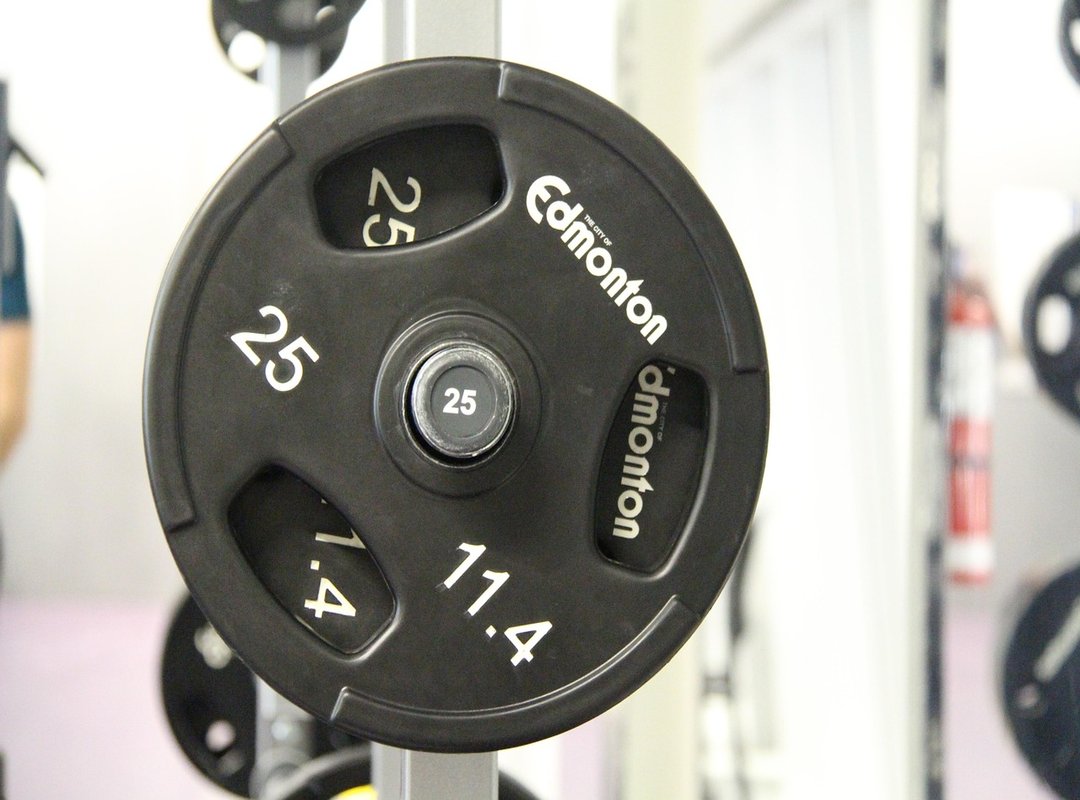
In the fitness world, 405 pounds is a significant milestone. It’s equivalent to four 45-pound plates on each side of a standard 45-pound Olympic barbell.
For context, this weight is a benchmark deadlift or squat for advanced amateur powerlifters.
Imagine trying to lift a large adult male gorilla. Or a vending machine, and or two average American adult males.
That’s what 405 pounds feels like.
In kilograms, 405lbs to.kg is 183.7 kg. In international weightlifting competitions, you’d see this represented with specific color-coded plates: three 25kg red plates, one 15kg yellow plate, and smaller change plates per side.
Understanding these comparisons helps bridge the gap between an abstract number and a concrete concept. It makes the weight more tangible and relatable.
Pounds to Kilograms Quick Reference Chart
I remember the first time I needed to convert pounds to kilograms. It was for a gym competition, and I had no idea where to start. That’s when I realized a quick reference chart would be a lifesaver.
| Pounds (lbs) | Kilograms (kg) |
|---|---|
| 315 lbs | 142.9 kg |
| 350 lbs | 158.8 kg |
| 375 lbs | 170.1 kg |
| 400 lbs | 181.4 kg |
| 405 lbs | 183.7 kg |
| 425 lbs | 192.8 kg |
| 450 lbs | 204.1 kg |
This chart is especially handy if you’re dealing with weights around 405lbs to.kg.
Common mistakes to avoid:
– Accidentally multiplying when you should divide.
– Using an incorrect conversion factor, like 2.0 instead of 2.2.
One thing that often confuses people is the difference between lb (pound-mass) and lbf (pound-force). For weight conversions, we are always dealing with pound-mass. It’s a subtle but important distinction.
Having this chart on hand can save you a lot of trouble. Trust me, it’s better than fumbling with a calculator every time.
Mastering Your Weight Conversions
Converting 405lbs to kg results in 183.7 kg, and the process is straightforward using a simple division or multiplication. The core formula to remember is to divide by 2.20462. This conversion is a practical skill for various fields, including fitness, travel, and science.
If you prefer not to do the math manually, consider bookmarking this page or using an online conversion calculator for future needs. Now you have the tools and knowledge to handle any pound-to-kilogram conversion with ease.
 Freddie Penalerist writes the kind of gadget reviews and comparisons content that people actually send to each other. Not because it's flashy or controversial, but because it's the sort of thing where you read it and immediately think of three people who need to see it. Freddie has a talent for identifying the questions that a lot of people have but haven't quite figured out how to articulate yet — and then answering them properly.
They covers a lot of ground: Gadget Reviews and Comparisons, Emerging Tech Trends, Practical Tech Tips, and plenty of adjacent territory that doesn't always get treated with the same seriousness. The consistency across all of it is a certain kind of respect for the reader. Freddie doesn't assume people are stupid, and they doesn't assume they know everything either. They writes for someone who is genuinely trying to figure something out — because that's usually who's actually reading. That assumption shapes everything from how they structures an explanation to how much background they includes before getting to the point.
Beyond the practical stuff, there's something in Freddie's writing that reflects a real investment in the subject — not performed enthusiasm, but the kind of sustained interest that produces insight over time. They has been paying attention to gadget reviews and comparisons long enough that they notices things a more casual observer would miss. That depth shows up in the work in ways that are hard to fake.
Freddie Penalerist writes the kind of gadget reviews and comparisons content that people actually send to each other. Not because it's flashy or controversial, but because it's the sort of thing where you read it and immediately think of three people who need to see it. Freddie has a talent for identifying the questions that a lot of people have but haven't quite figured out how to articulate yet — and then answering them properly.
They covers a lot of ground: Gadget Reviews and Comparisons, Emerging Tech Trends, Practical Tech Tips, and plenty of adjacent territory that doesn't always get treated with the same seriousness. The consistency across all of it is a certain kind of respect for the reader. Freddie doesn't assume people are stupid, and they doesn't assume they know everything either. They writes for someone who is genuinely trying to figure something out — because that's usually who's actually reading. That assumption shapes everything from how they structures an explanation to how much background they includes before getting to the point.
Beyond the practical stuff, there's something in Freddie's writing that reflects a real investment in the subject — not performed enthusiasm, but the kind of sustained interest that produces insight over time. They has been paying attention to gadget reviews and comparisons long enough that they notices things a more casual observer would miss. That depth shows up in the work in ways that are hard to fake.