
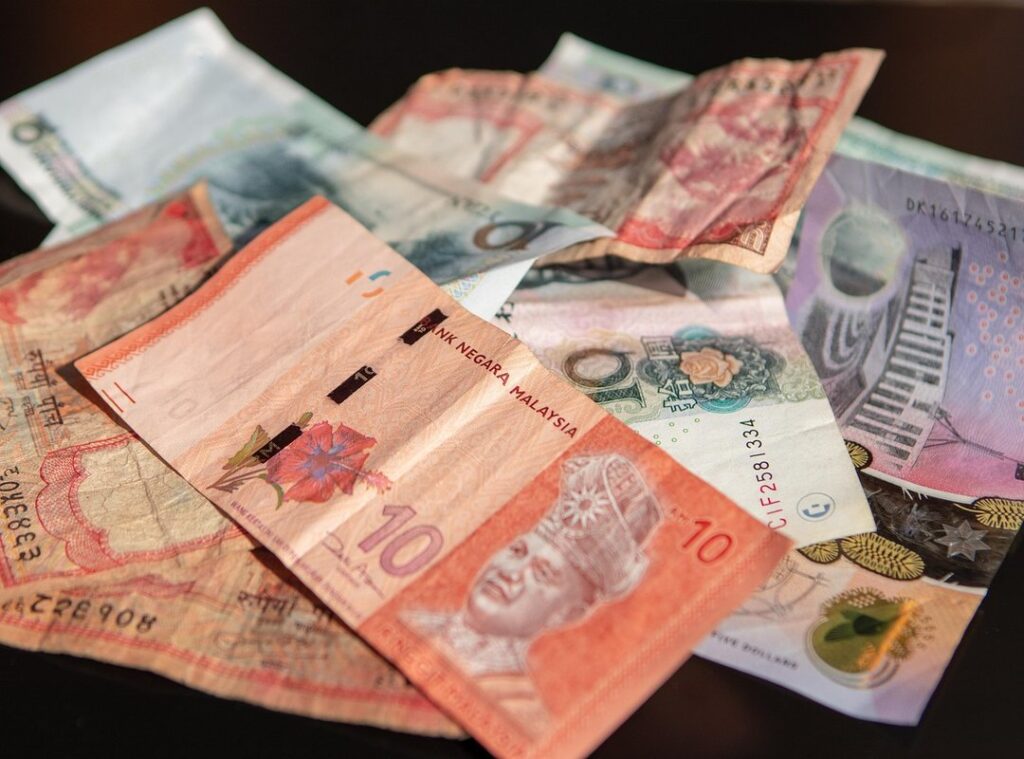
Right now, 1400 ringgit berapa rupiah is about 4.5 million IDR. But hey, that number changes every day.
This guide is here to help you figure it out anytime you need. I’ll show you how to find the live exchange rate and the simple formula to convert MYR to IDR.
You’ll also learn what makes the rate go up and down. It’s not as complicated as it seems.
I’ll give you practical tips on the best and cheapest ways to exchange currency. Whether you’re traveling, doing business, or sending money, this guide has got you covered.
Trust me, understanding currency conversion is easier than it looks. Let’s break it down step-by-step.
Understanding the Core Numbers: MYR to IDR Exchange Rate Explained
An exchange rate is simply the price of one currency in terms of another. It’s like saying how many apples you can get for an orange.
MYR stands for Malaysian Ringgit, and IDR stands for Indonesian Rupiah. These are the standard codes used globally to identify these currencies.
The mid-market rate, or interbank rate, is the ‘real’ exchange rate that banks and financial institutions use to trade with each other. It’s like the wholesale price of a product.
When you go to a money changer or bank, the rate you get is different from the mid-market rate. This difference is called a ‘spread’ or commission. Think of it as the markup between the wholesale and retail prices in a store.
So, if you’re wondering 1400 ringgit berapa rupiah, you need to check the current exchange rate and apply the spread. This way, you know exactly what you’re getting and why.
A Step-by-Step Calculation: How to Convert 1400 MYR to IDR
Converting Malaysian Ringgit (MYR) to Indonesian Rupiah (IDR) can be straightforward if you follow these steps.
Step 1: Find the current, live MYR to IDR exchange rate.
I recommend using reliable, free online sources like Google Finance, XE.com, or Reuters. These platforms are trustworthy because they update their rates frequently and provide accurate, real-time information.
Step 2: Use the simple conversion formula.
Amount in Rupiah (IDR) = Amount in Ringgit (MYR) x (Current IDR per MYR rate)
Let’s walk through an example. If the current rate is 1 MYR = 3,550 IDR, then 1400 MYR would be:
1400 x 3,550 = 4,970,000 IDR
Here’s a small table showing sample conversions for common amounts based on this rate: Fntkech
| MYR | IDR |
|---|---|
| 100 | 355,000 |
| 500 | 1,775,000 |
| 1000 | 3,550,000 |
| 1400 | 4,970,000 |
This table helps you see how the conversion works for different amounts.
Always use the current day’s rate for your own calculations. The numbers in the example are for illustration only. Rates can change daily, so it’s crucial to get the most up-to-date information.
If you’re wondering 1400 ringgit berapa rupiah, just plug the current rate into the formula. It’s that simple.
Why Does the Ringgit-Rupiah Exchange Rate Fluctuate?
Currency values, like the ringgit and rupiah, aren’t set in stone. They change based on supply and demand, just like any other product.
Central banks, such as Bank Negara Malaysia and Bank Indonesia, play a big role. Their decisions on interest rates can strengthen or weaken a currency. Higher interest rates usually make a currency more attractive to investors, driving up its value.
Economic health is another key factor. Inflation and economic growth (GDP) in both Malaysia and Indonesia impact the exchange rate. If one country’s economy is booming, its currency might become more valuable.
Trade between the two nations also matters. For example, if Indonesia exports more to Malaysia, the demand for the Rupiah can increase. This can affect the exchange rate.
Major political events or economic news can cause short-term volatility. A sudden change in government policy or an unexpected economic report can make the exchange rate jump or drop.
Understanding these factors can help you make sense of why the 1400 ringgit berapa rupiah changes. It’s all about the balance of supply and demand, influenced by central bank policies, economic conditions, and trade dynamics.
Finding the Best Deal: Top Ways to Exchange Your Currency

When it comes to exchanging currency, you’ve got a few options. Let’s break them down.
- Traditional Banks
- Pros: Security is a big plus. You know your money is in safe hands.
-
Cons: Often, they charge higher fees and offer worse exchange rates. Not the best deal, right?
-
Licensed Money Changers
- These are commonly found in airports and cities. They usually offer better rates than banks.
-
The catch, and you need to shop around. Rates can vary, and you might end up spending more time than you’d like.
-
Using an ATM in Indonesia with a Malaysian Bank Card
- This is super convenient, especially if you’re traveling. You can get cash quickly.
-
But be aware of potential withdrawal limits and bank fees. It’s not always the cheapest option.
-
Modern Alternatives: Multi-Currency Accounts or Services (e.g., Wise)
- These services often provide rates closer to the mid-market rate, which means you get more bang for your buck.
- Transparent fees are a big plus. No hidden surprises here.
So, if you’re wondering how much 1400 ringgit berapa rupiah, using a modern service like Wise can give you a clearer and often better rate. Just make sure to check the fees and do a bit of research.
Your Quick Checklist for Smart Currency Conversion
- Always check the live mid-market rate before making any exchange.
- Compare not just the exchange rates, but also any hidden fees or commissions.
- Use reliable online tools or apps to get the most accurate and up-to-date information.
- 1400 ringgit berapa rupiah changes daily, but now you have the tools to find the answer anytime.
 Freddie Penalerist writes the kind of gadget reviews and comparisons content that people actually send to each other. Not because it's flashy or controversial, but because it's the sort of thing where you read it and immediately think of three people who need to see it. Freddie has a talent for identifying the questions that a lot of people have but haven't quite figured out how to articulate yet — and then answering them properly.
They covers a lot of ground: Gadget Reviews and Comparisons, Emerging Tech Trends, Practical Tech Tips, and plenty of adjacent territory that doesn't always get treated with the same seriousness. The consistency across all of it is a certain kind of respect for the reader. Freddie doesn't assume people are stupid, and they doesn't assume they know everything either. They writes for someone who is genuinely trying to figure something out — because that's usually who's actually reading. That assumption shapes everything from how they structures an explanation to how much background they includes before getting to the point.
Beyond the practical stuff, there's something in Freddie's writing that reflects a real investment in the subject — not performed enthusiasm, but the kind of sustained interest that produces insight over time. They has been paying attention to gadget reviews and comparisons long enough that they notices things a more casual observer would miss. That depth shows up in the work in ways that are hard to fake.
Freddie Penalerist writes the kind of gadget reviews and comparisons content that people actually send to each other. Not because it's flashy or controversial, but because it's the sort of thing where you read it and immediately think of three people who need to see it. Freddie has a talent for identifying the questions that a lot of people have but haven't quite figured out how to articulate yet — and then answering them properly.
They covers a lot of ground: Gadget Reviews and Comparisons, Emerging Tech Trends, Practical Tech Tips, and plenty of adjacent territory that doesn't always get treated with the same seriousness. The consistency across all of it is a certain kind of respect for the reader. Freddie doesn't assume people are stupid, and they doesn't assume they know everything either. They writes for someone who is genuinely trying to figure something out — because that's usually who's actually reading. That assumption shapes everything from how they structures an explanation to how much background they includes before getting to the point.
Beyond the practical stuff, there's something in Freddie's writing that reflects a real investment in the subject — not performed enthusiasm, but the kind of sustained interest that produces insight over time. They has been paying attention to gadget reviews and comparisons long enough that they notices things a more casual observer would miss. That depth shows up in the work in ways that are hard to fake.